


Monogram vs Duogram: What’s the Difference?

A custom mark can make wedding stationery feel deeply personal before guests read a single word. It may appear quietly at the top of an invitation, pressed into an envelope flap, woven through a crest, or repeated across menus, cocktail napkins, dance floors, and welcome gifts.
Two terms often used when describing these designs are monogram and duogram. They are closely related, and people sometimes use them interchangeably, but they are not quite the same.
A monogram is a decorative design created from one or more initials.
A duogram is a specific type of monogram created from exactly two initials, usually representing two people.
In wedding stationery, that distinction can help couples choose a mark that feels balanced, intentional, and suited to the way they want their names represented.
Neither option is inherently more formal or more luxurious. The right choice depends on the initials, the design style, the moment when the mark will be used, and the story the stationery is meant to tell.

Monograms and Duograms Share a Purpose but Use Initials Differently
The easiest way to understand the difference between a monogram and a duogram is to look at how many initials are included and how they are arranged.
A monogram is a symbol made by combining or arranging initials into one unified design. It may feature a single initial, two initials, or several initials. The letters may overlap, interlock, mirror one another, or sit within a decorative framework.
A duogram uses exactly two initials. For weddings, those letters most often represent each partner’s first name. A duogram may be as simple as two letters placed side by side or as detailed as a pair of custom-drawn characters that connect in a distinctive way.
For example, a couple named Anna and James might use:
A + J as a clean two-letter duogram
AJA or another multi-initial arrangement as a monogram using first and shared last-name initials
A single J as a family monogram after marriage, if they will share that last name
In everyday conversation, all three designs may be called monograms. In more precise design language, however, the first example is a duogram because it is made specifically from two initials.
The distinction is useful, but the emotional effect matters more than the label. Both can become a visual signature for the wedding.
A Duogram Celebrates Two Individuals Coming Together
A duogram is especially meaningful for wedding stationery because it gives equal visual presence to both partners. Each person is represented by one initial, and the design brings the two letters into a relationship.
Some duograms keep the initials clearly separate. Others overlap or connect them so they appear to form a single symbol. The structure can subtly reflect the overall style of the celebration.
A traditional script duogram can feel romantic and formal. A geometric design can feel modern and architectural. Hand-drawn letters may feel artistic and organic, while a serif pairing can create an understated, editorial look.

Duograms tend to work beautifully when:
The couple wants both first names represented equally
The partners will keep their individual last names
A shared married name has not been chosen
The wedding design is centered on the couple rather than a family name
The initials create a visually appealing two-letter pairing
The mark needs to remain clear at a small size
A duogram also avoids many questions about surname etiquette before the ceremony. Because it generally uses first-name initials, it can be used throughout the engagement and wedding without suggesting that either partner has already changed a last name.

A Monogram Can Represent a Person, Couple, or New Family Identity
Monogram is a broader design category, which allows for more variation. For wedding stationery, a monogram may include the couple’s first initials and a shared last-name initial, one prominent surname initial, or another combination chosen for its meaning and visual balance.
A three-letter wedding monogram might place the shared last-name initial in the center, with each partner’s first initial on either side. This arrangement has a traditional quality and can make the family name feel central to the design.
A single-letter monogram can be equally elegant. One beautifully drawn surname initial may create a strong focal point without requiring a more complex arrangement. This can be especially effective when the letter has a distinctive shape or when the wedding aesthetic is minimal and refined.

Monograms tend to work well when:
The couple wants to emphasize a shared surname
The wedding style is traditional, formal, or heritage-inspired
The mark will continue to be used after the wedding
A single initial creates a stronger design than the couple’s two first initials
The stationery includes a crest, emblem, or ornamental framework
The couple wants a more layered or symbolic identity
Because a monogram can take several forms, custom design is particularly valuable. The number of letters alone does not determine whether the result will feel balanced. The shapes, widths, curves, and visual weight of the initials all affect the final composition.
The Most Important Difference Is the Story Each Mark Tells
Choosing between a monogram and a duogram is not simply a matter of selecting two letters or three. Each approach places emphasis on a different part of the couple’s story.
A duogram often emphasizes | A monogram can emphasize |
Two individuals | A couple or family identity |
First names | First names, surnames, or both |
Equal visual representation | A central or shared initial |
The union itself | Heritage, tradition, or continuity |
Simplicity and versatility | Layering and symbolism |
A duogram often feels like a conversation between two people. A traditional multi-letter monogram may feel more like the creation of a shared household or family identity.
That does not mean a duogram must be modern or a monogram must be traditional.
Typography and composition have an enormous influence. A flourished duogram can feel old-world and ceremonial, while a single-letter monogram drawn with clean lines can feel strikingly contemporary.
Wedding Etiquette Can Influence When Certain Initials Are Used
Wedding monogram etiquette is less rigid than it once was, but timing is still worth considering when a design includes a shared surname.
Traditionally, a couple would avoid using a new shared last-name monogram before the ceremony, since the marriage had not yet taken place. Under that convention, first-name initials could appear on save-the-dates, invitations, and pre-wedding pieces, while a shared surname initial would be reserved for the reception or items used after the ceremony.
Today, many couples take a more personal approach. Some use their future shared initial throughout the invitation suite because the stationery represents the celebration that is about to take place. Others prefer to follow the traditional sequence.
Couples who are keeping separate surnames, combining names, or choosing a new family name may use a two-letter duogram or another custom arrangement that better reflects them.
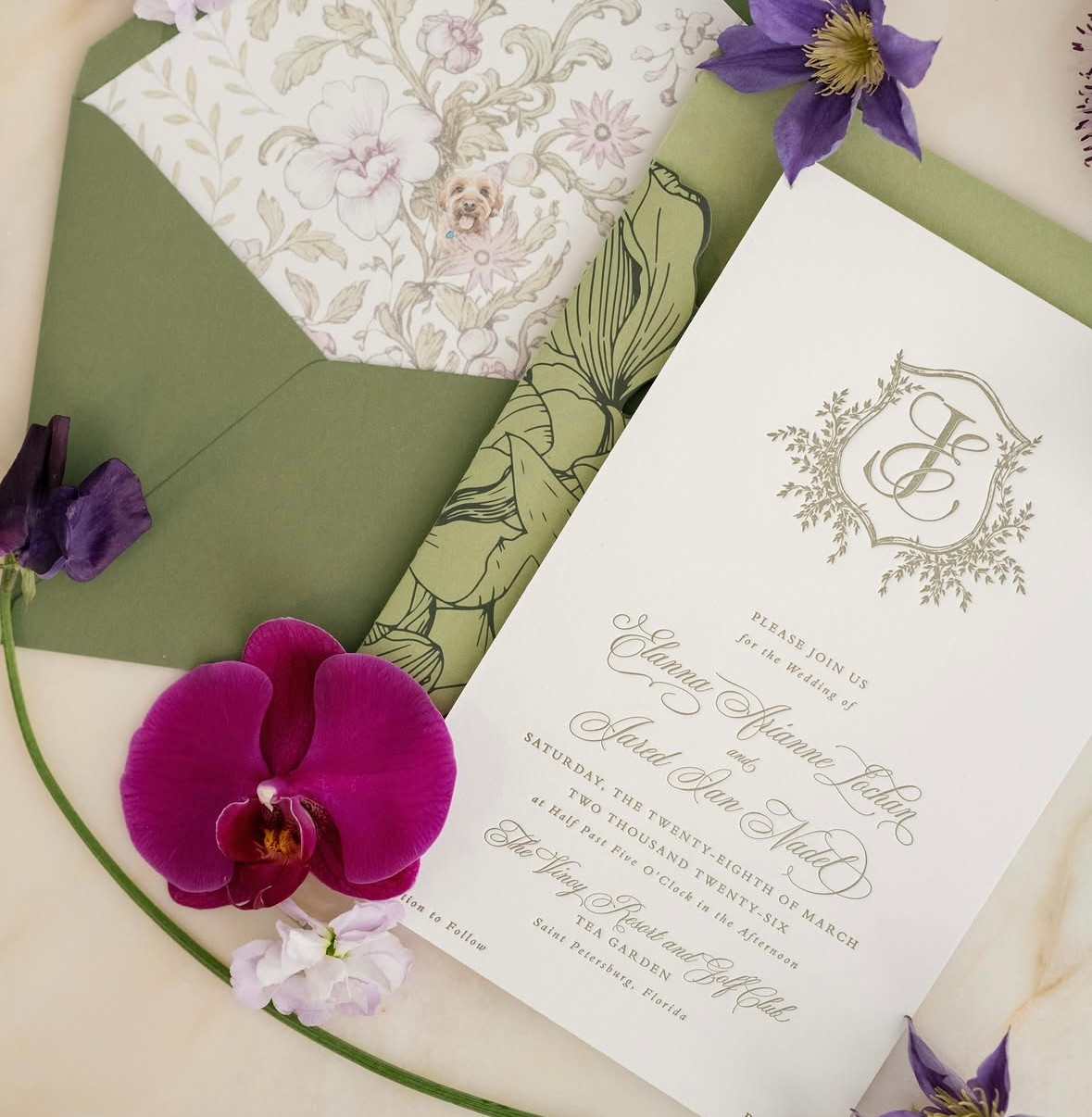
There is no single format that suits every relationship. The most thoughtful design is one that represents the couple accurately and makes them comfortable.
If traditional etiquette is important, consider using:
A first-name duogram before the ceremony
A shared surname monogram at the reception and afterward
A wedding crest that incorporates personal symbols without relying on a future surname
Separate initials connected by an ampersand or a subtle design element
The purpose is not to follow a rule simply because it exists. It is to make the timing and meaning of the mark feel intentional.
The Shape of the Initials Can Guide the Best Design
Sometimes the letters make the decision.
Certain initials naturally interlock. A curved letter may wrap around a narrow one, or two mirrored forms may create a beautifully symmetrical design. Other combinations look stronger when given space and placed side by side.
The designer may consider:
The height and width of each letter
Whether the initials share similar curves or angles
How legible they remain when overlapped
Whether one letter visually overpowers the other
How the mark looks at both large and small scales
Whether the design will be printed, letterpressed, engraved, embroidered, or cut from another material
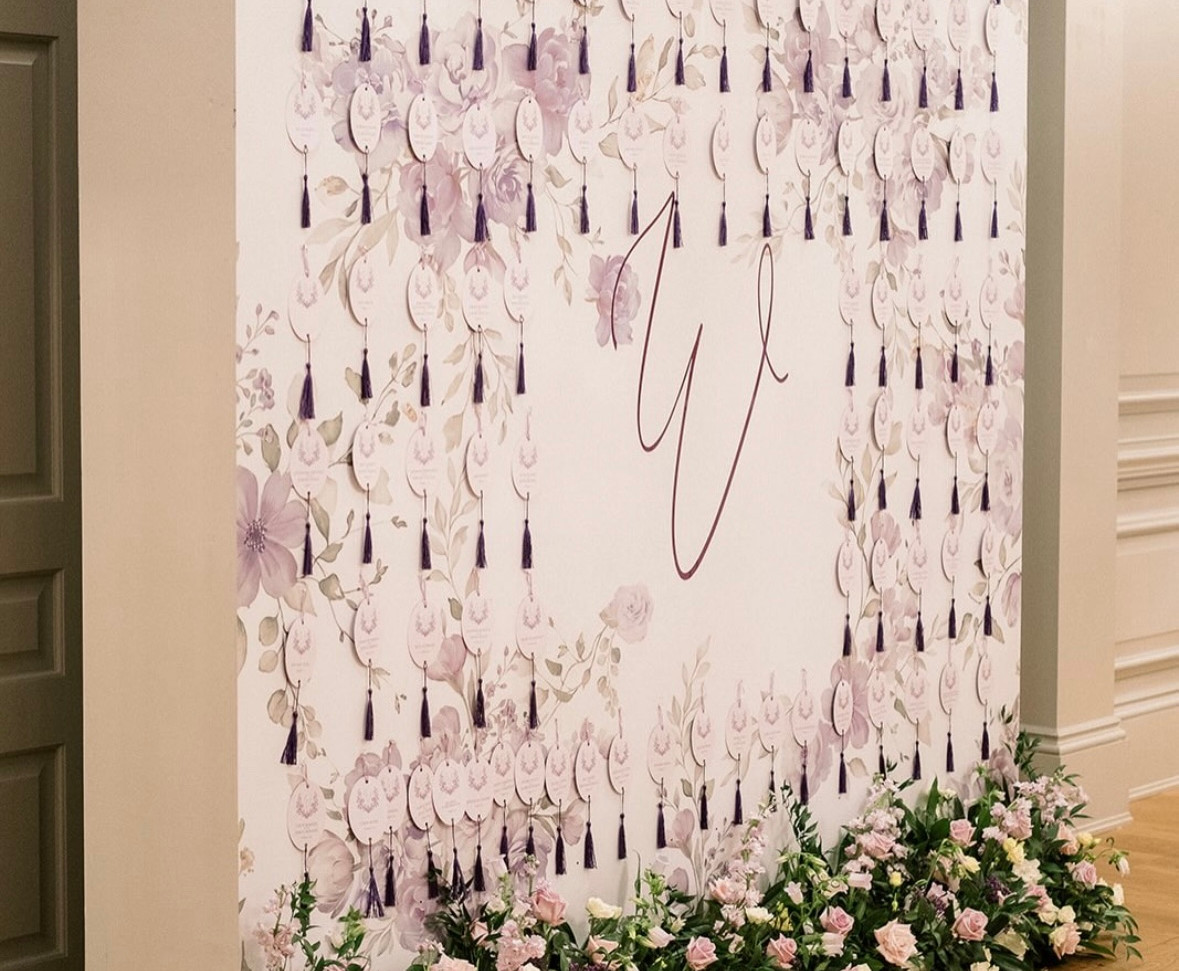
A highly detailed monogram may look beautiful on a large welcome sign but lose clarity when printed on a small place card. A simple duogram may reproduce more consistently across an entire suite, from the invitation to cocktail napkins.
This is one reason a custom monogram or duogram should be designed as part of the larger stationery system. It needs to do more than look beautiful on its own. It should work wherever it will appear.

Both Can Create Cohesion Across the Full Wedding Experience
Once created, a monogram or duogram can become one of the most versatile elements in the wedding design. Repeating it thoughtfully gives the celebration a recognizable visual thread without requiring every piece to look identical.
A custom mark can appear on:
Save-the-dates
Invitation cards
Envelope flaps
Wax seals
Belly bands
Welcome signs
Ceremony programs
Menus and place cards
Bar signs and cocktail napkins
Dance floors
Favor packaging
Thank-you notes
The key is restraint. A monogram feels most luxurious when it is used with purpose rather than placed on every available surface. It might be prominent on the invitation, then appear more quietly on the menu, bar sign, and thank-you card.
Scale and production method can also create variety. The same design might be blind letterpressed into an envelope flap, printed in color on a details card, engraved on acrylic, or embroidered onto fabric. The mark remains consistent while the material and treatment change.
A Custom Crest Is Different From Both
Monograms, duograms, and wedding crests are sometimes discussed together, but a crest is a more complete illustrative composition.
A wedding crest may include a monogram or duogram at its center, surrounded by florals, architectural details, meaningful places, pets, cultural references, or other personal symbols. It can tell a broader visual story than initials alone.
Couples may prefer a crest when they want:
More color and illustration
Personal imagery beyond their names
A design connected to the venue or destination
Symbols representing family, culture, or shared interests
A more decorative focal point for the invitation suite

A custom crest elevates the duogram into an elegant wedding signature.
A monogram or duogram can stand on its own or become part of a crest. The two are not competing choices. In many luxury stationery suites, the initial mark provides structure while the crest adds richness and narrative detail.
How to Choose Between a Monogram and a Duogram
Begin with what the mark should represent.
Choose a duogram when the focus is on the two of you.Two first-name initials can create a balanced and personal symbol without placing emphasis on either surname.
Choose a monogram when you want more flexibility. A monogram can incorporate one initial, a shared surname, or several initials in a more traditional or layered arrangement.
Consider where the mark will appear.If it must remain clear on small pieces, a simple duogram or single-letter monogram may reproduce best. If it will anchor a formal invitation or large installation, a more intricate design may be appropriate.
Let the letters influence the composition.Some combinations look beautiful when intertwined, while others need space. The strongest design works with the natural shapes of the initials.
Think beyond the wedding day.A surname monogram may transition easily to personal stationery, entertaining pieces, or home details after the celebration. A first-name duogram may remain a meaningful symbol of the wedding itself.
FAQ
Is a duogram a type of monogram?
Yes. Monogram is the broader term for a design made from initials. A duogram is a monogram composed specifically of two letters.
What initials are used in a wedding duogram?
A wedding duogram most commonly uses the first initial of each partner’s first name. The letters can be intertwined, overlapped, mirrored, or arranged side by side.
How many initials are in a wedding monogram?
A wedding monogram may use one, two, or several initials. A traditional three-letter arrangement often includes each partner’s first initial and a shared last-name initial, while a single-letter monogram may feature only the family name.
Can we use a shared last-name initial before the wedding?
Traditional etiquette reserves a new shared surname monogram for after the ceremony. Many modern couples choose to use it throughout the wedding stationery instead. A first-name duogram is a graceful option for couples who prefer to follow the traditional timing.
What if we are keeping separate last names?
A duogram using both first-name initials works beautifully and gives each partner equal representation. A designer can also create a custom mark using both surname initials or develop a crest based on personal symbols rather than a shared name.
Can a monogram be used beyond the invitation?
Yes. A well-designed mark can carry through day-of stationery, signage, favors, linens, and thank-you notes. Some couples also continue using a surname monogram on personal stationery and pieces for the home.

The Best Mark Feels Distinctly Yours
The difference between a monogram and a duogram begins with the number and arrangement of the initials, but the most meaningful difference is what the design represents.
A duogram brings two individual names together in one balanced mark. A monogram can express a shared name, a new family identity, or a more layered combination of initials.
Both can become a refined signature that connects the invitation suite to the wedding day and, in some cases, to the years that follow.
At URBANcoast, we believe the strongest wedding marks are not chosen from a formula.
They are shaped around the couple, the letters, and the larger design story. Whether simple and modern or ornate and traditional, a custom monogram or duogram should feel personal at first glance—and unmistakably yours.

